
Feb 13, 2026
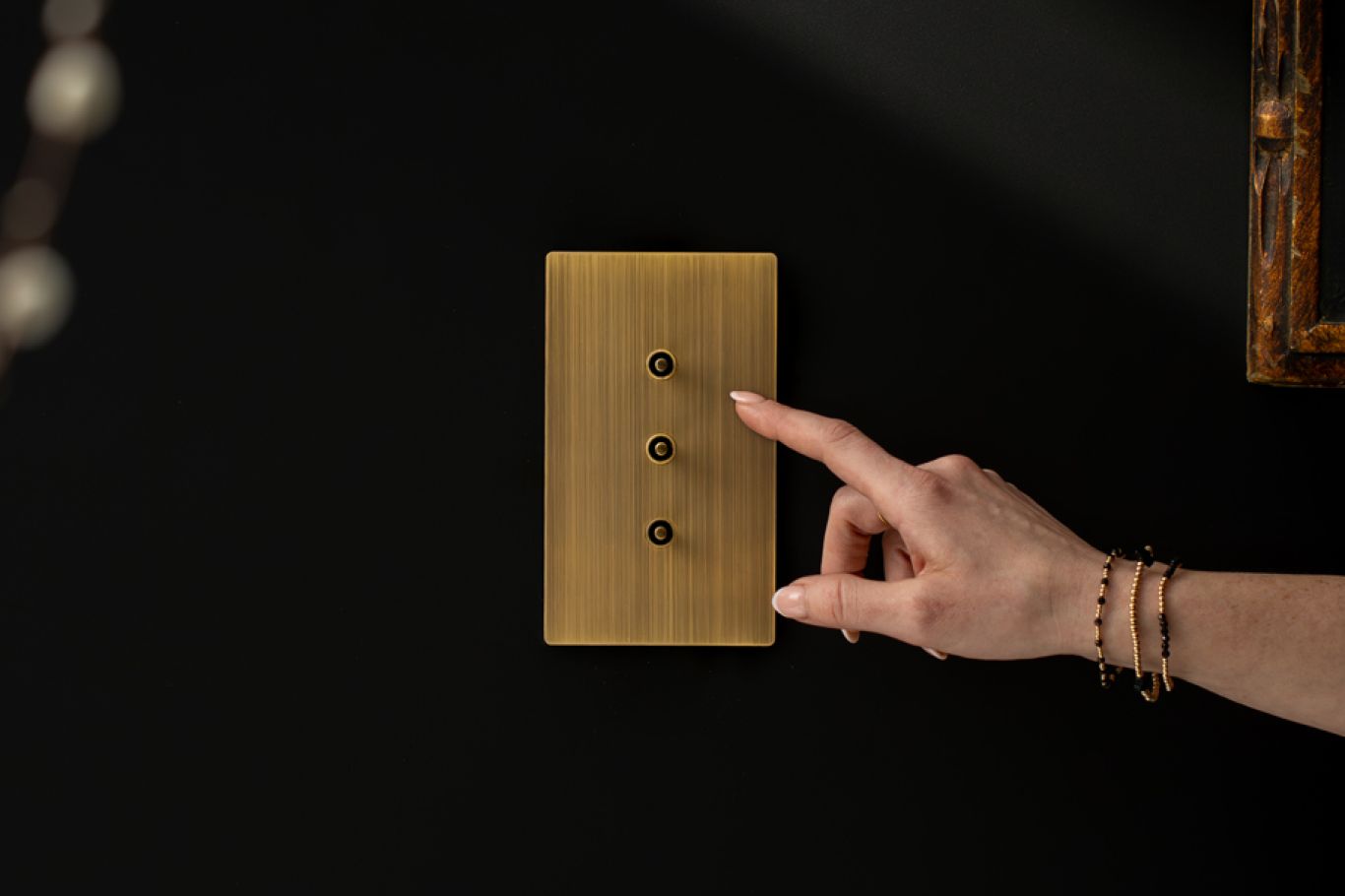
Simplicity has become the hallmark of good smart home design. Homeowners increasingly want technology that blends quietly into daily life: intuitive, reliable, and unobtrusive. Rather than dazzling with technical sophistication, the modern smart home succeeds when it feels natural and easy.
Let's start with the biggest misconception that we come across:
Simple = means a basic system which is not sophisticated, literally speaking this refers to basic products which are aimed at the DIY smart home enthusiasts.
Easy to use = practical and intuitive controls that anyone can use without any prior training on the systems. Easy to use systems often need a high degree of intelligence and initial setting up 'behind the scenes', in order to make the front end interactions that the homeowners use, 'simple'.
Modern life already demands constant attention — work, family, travel, and digital communication compete for focus. The smart home should reduce that burden, not add to it.
These days our smart phones are the benchmark, the embedded ‘quick actions’ in Apple’s IOS means you can access widgets, or your control centre quickly for everyday tasks. Your modern connected home which costs many thousands more should at least be on a par with it.
Simplicity reduces friction. A single action — whether pressing one button or issuing one voice command — should achieve what previously required multiple steps.
Smart homes are no longer the preserve of billionaires and technology enthusiasts. They are installed for everyday people with busy lives, and remembering where certain features lie deep within sub-menus or pages means we have failed to do our job. In addition to this the owners are not the only people using the home:
When controls are intuitive, everyone in the home including guests can use them confidently.

One of the most significant shifts in recent years has been the move away from fragmented control. In the past, each device manufacturer provided its own app. A lighting system had one interface; the thermostat another; CCTV cameras yet another.
Modern installations can rely on consolidated platforms such as Crestron, Lutron, or Savant. These platforms can bring disparate devices into a single, coherent interface.
Instead of navigating multiple dashboards, homeowners can access different categories of their homes (light, heat, etc), from a layout which is unified; on the flip side the customer may never know that these systems exist, as they operate in the background doing the 'heavy lifting' silently, autonomously.
The result is not just convenience, but clarity.
Trying to clean up wall spaces is great, but simple, functional controls should not be replaced in favour of clean sightlines. For the past decade we have been hiding controls in cupboards, partly because they looked so ugly, but unless you live full time in the house, no-one knows to look in the wardrobe to set the temperature.
Thankfully some of the user controls are so aesthetically pleasing, and intuitive, this is no longer necessary.

A polarising technology, yet devices such as Amazon Echo and Google Nest Hub enable users to speak naturally rather than search through menus. A technology which will only improve and feel more natural in the years to come, as AI and voice control align.
In many London homes, where wall space is at a premium and aesthetics matter, voice interaction reduces the need for visible control panels. A simple spoken instruction — “Alexa, goodnight” — can shut down an entire home, giving back time and convenience to the user.
Importantly, voice control works best when routines are thoughtfully designed in advance. The simplicity the user experiences is the result of careful configuration behind the scenes.
A family renovating a Victorian terrace recently contacted us to modernise their property without compromising period character. They wanted minimal visible technology and maximum ease of use.
The solution focused on:
Instead of generic scene lighting "entertain" "relax" and so on, we used more familiar terms: "Bright" "Medium" "Low" and "Late".
Each family member understands these options immediately. Grandparents visiting can use the same wall switches they are accustomed to; the intelligence operates invisibly in the background.
The system’s success lies in its restraint. Rather than offering dozens of complicated settings, it delivers a handful of reliable, clearly labelled choices.
For an added bonus we also restored the vintage butler bell system and gave this a new lease of life:

One barrier to simplicity has historically been compatibility. Devices from different manufacturers did not always communicate smoothly.
The emergence of standards such as 'Matter protocol' aims to address this issue. By encouraging cross-brand compatibility, Matter reduces the technical friction involved in creating unified systems.
For homeowners and installers alike, this means fewer workarounds and more predictable performance — both essential ingredients of a simple and reliable user experience.
The end result is faith in the products and solutions being installed, thanks to our many years of experience, and repeatedly consistent results using our preferred core brands, we have genuine faith that the equipment we provide is going to work, at completion and for many years to come.
Of course, simplicity must not come at the expense of functionality. Most homeowners planning a refurbishment or new build still desire:
The key is layered design. Everyday users see only essential controls, while more advanced options remain accessible but unobtrusive.
The best smart homes are simple on the surface, yet sophisticated behind the scenes.
Looking ahead, the trend towards simplicity will likely intensify. Sensors and machine learning are enabling homes to respond automatically to occupancy patterns, daylight levels, and habitual routines.
The most successful systems will require fewer explicit commands. Lights will adjust gradually as evening falls. Heating will respond to weather forecasts. Security systems will arm automatically when the last occupant leaves.
We feel that when technology anticipates needs without demanding attention, it give true value to the users.
In London and The Home Counties where we mostly work, the smart home is evolving from a showcase of features into a quietly competent domestic assistant that works day and night, unseen. The emphasis has shifted from complexity to clarity, from technical novelty to human-centred design.
Simplicity is not about reducing capability; it is about presenting capability in a way that feels natural and effortless. Through unified platforms, simple intuitive controls that require no prior training, and thoughtful integration, modern smart homes are becoming easier to live with — and easier to love.
In the end, the true measure of a smart home is not how clever it appears, but how little you have to think about it at all:
“"Good design is actually a lot harder to notice than poor design, in part because good designs fit our needs so well that the design is invisible." Don Norman